
Palatino Garden Adventures

Greenhouse Harvest
Pea shoot pesto, with the cat supervising
The peas in my beds aren't there for peas. They're a cover crop, fixing nitrogen all winter so my summer tomatoes have something to eat. The pesto is a side benefit, and it's the best one of the year.
KEEPS
5 days
HARVEST
2 cups
PREP
10 min
YIELD
1 small jar
[object Object]
[object Object]
Most people grow peas for peas. I grow them for soil. Specifically, I grow speckled peas, those mottled, gray-and-pink seeds I order by the pound from True Leaf Market, as a cover crop in my greenhouse raised beds from October through early March. They sit there all winter doing two jobs: holding the soil against the rain, and pulling nitrogen out of the air to store in their roots.
Then in March, when it's time to plant tomatoes and peppers and squash, I terminate the crop. I cut it down at the base, leave the roots in the ground, and chop the green tops back into the bed. The roots release their nitrogen slowly as they decompose. The summer crops feed on it for months.
Somewhere in the middle of all of this, in late February or early March, the peas put on a thick flush of tender shoots. That's the window for pesto.

From the Bed
If you're only going to learn one regenerative practice for your kitchen garden, learn cover cropping. It does more for soil health than any amendment you can buy.
Cover crops are plants you grow specifically to take care of the soil between food crops. Legumes like peas, vetch, and clover are especially valuable because they form a partnership with bacteria in their roots that captures atmospheric nitrogen and stores it in nodules. When the plant dies and decomposes, that nitrogen becomes available to whatever you grow next.
The seeds I use are speckled peas from True Leaf Market, sometimes called maple peas or field peas. They're sold as a sprouting and microgreen seed, which is what most people use them for. The same seed works beautifully as a cover crop, which is what I do with mine. One pound covers a generous raised bed at the dense rate cover crops want.
Sow them in October when you pull your summer crops. Broadcast the seeds across the bed, rake them in to about half an inch deep, water them well, and ignore them until late February. They tolerate Pacific Northwest winters down into the teens, they don't need fertilizer (they make their own nitrogen), and they'll outcompete most winter weeds.
By late February, the bed is a thick carpet of grey-green shoots, eight to twelve inches tall. This is when you can take a generous harvest without compromising the cover crop's main job. Cut the top three to four inches off the plants. Leaves, stems, tendrils, the whole tender top goes into the kitchen. The plants will keep growing for another two or three weeks before you terminate them in early March.
Don't let them flower if you're using them as a cover crop. Once they flower, the plant pulls nitrogen back out of its roots and into the seeds, which defeats the entire purpose.
INGREDIENTS
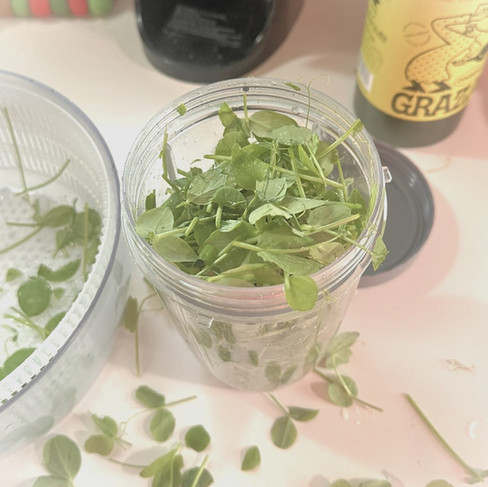
2 packed cups pea shoots, washed
4 garlic cloves, peeled
⅓ cup grated parmesan
½ cup good extra virgin olive oil
Juice of half a lemon
Flaky salt, to taste
Black pepper
INSTRUCTIONS



STEP 1
Wash the pea shoots well and spin them dry. They hold less grit than arugula but more than basil — give them a real rinse.
STEP 2
Add the shoots, garlic, and a generous pinch of salt to a food processor or small blender. Pulse until everything is roughly chopped.
STEP 3
Add the parmesan and pulse a few more times.
STEP 4
With the motor running, stream in the olive oil. Stop when it looks loose and spoonable but still has texture — you want flecks of green, not baby food.
STEP 5
Add lemon juice and pepper. Taste. The pea shoots are sweet, so you may want more lemon than you'd add to a basil pesto. Adjust salt last.
HOW TO USE IT
Toss with hot pasta and a splash of pasta water — gemelli holds the sauce well, but anything twisted or ridged works. Spread on toast under a poached egg. Stir into white beans or ricotta. Spoon over roasted carrots. Thin with extra olive oil and use as a dressing for the first salad greens of spring.
🌿 Want a kitchen garden that takes care of its own soil?
Cover cropping is one of the practices I build into every Executive Kitchen Garden System I install — because soil that feeds itself means less work and better food year after year. The PNW Crop Planner Pro maps cover crop windows alongside your edible crops so you always know what to sow when. Or, if you'd rather have someone design and install the whole system for you, book a free Strategy Session.
From the Palatino Garden Adventures Kitchen
SEATTLE · ZONE 8B · GROWN, HARVESTED & COOKED