
What to Do in the Seattle Kitchen Garden in Late June
A mid-summer walk through what I am doing in my Phinney Ridge beds right now, from starting the fall garden to choosing blueberries that actually crop.
Late June is a quiet turning point in the kitchen garden. The spring rush is over, the heat lovers are settling in, and it is tempting to just coast for a few weeks. This is exactly the moment to do a little of the work that decides what your fall and winter look like. Here is what has my attention in my Seattle kitchen garden this week.
Starting the second round, your fall and winter crops
Mid-June is the moment to start the second garden, the one that feeds you in October and November when most beds have given up. The mistake people make is waiting until the spring crops are spent and the weather is hot, then sowing tender seedlings straight into a dry, bare bed where the slugs and the heat wipe them out in a week. Start them now, in trays, somewhere with a little afternoon shade, and you give them a real chance.
What goes in this round are the cool crops that actually like finishing in cold weather, the Brassicas (cabbage, kale, broccoli, Brussels sprouts), along with leeks, and later the quick salad greens. I start my fall brassicas in flats and keep them out of the worst afternoon sun while they are small, then move them into the beds as the spring crops come out. The timing matters more than people think, because our light fades fast after September, and anything that is not close to full size by then more or less stops. Get the seeds going in the next few weeks and you set up a harvest that carries you deep into the cold months. That is the whole rhythm of a kitchen garden that never goes empty, one plan ending as the next one begins.


The best blueberries to grow in the Seattle Kitchen Garden (and why yours might be disappointing)
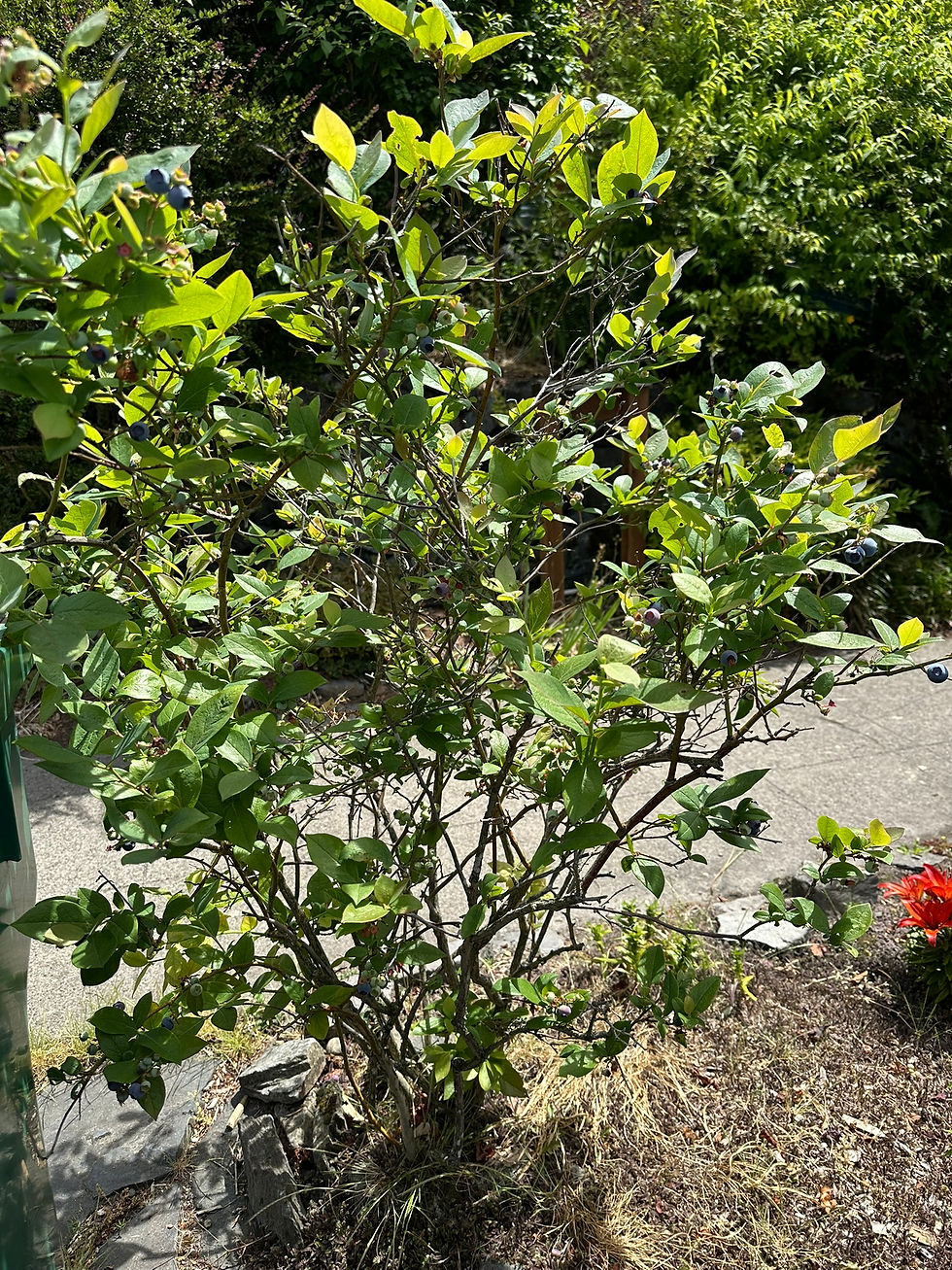
If your blueberry harvest has been underwhelming, the plant is usually not the problem. The variety is, or the company it keeps. Most blueberries are only partly self-fertile, so one lonely bush will fruit, but it will never give you what a small group does. Plant two or three different varieties near each other and the bees carry pollen between them, and you get more berries, bigger berries, and a longer picking window.
Here in Seattle we are in northern highbush country (Vaccinium corymbosum), the workhorse blueberry for our cool summers and mild, wet winters. The trick is to plant for a whole season, not a single week. An early variety like Duke, a mid-season one like Bluecrop, and a late one like Elliott will stretch your harvest from roughly late June into September instead of dumping everything in one overwhelming fortnight.
The other quiet reason for a meh harvest is the soil. Blueberries want it acidic, more acidic than almost anything else in the kitchen garden. If yours are sitting in ordinary bed soil, they will sulk no matter how good the variety. Keep them on the acidic side with an acidic mulch like pine needles or a proper soil acidifier, and that one change often does more for the fruit than anything you do to the plant itself.
Before you buy, check what your local nursery actually carries. Sky Nursery and Swanson's in Seattle both stock varieties suited to our area, so you go home with something that wants to grow here rather than a name off the internet. And give them time. A blueberry does not hit full stride until year three or four, but then it keeps producing for decades, so it is one of the best long game plants you can put in the ground.


The birds and my snap peas
The birds in my garden are not after the berries (yet). They go for the snap peas. Just as the vines push out those tender new shoots at the top, the birds come along and pick them right off, and a plant that keeps losing its growing tips slows right down. So this is where I step in.
I do not use netting. I am too nervous that a bird gets tangled and trapped in it, and that is not a trade I am willing to make. What I use instead is movement and shine. Old CDs hung from the trellis and the arbor, a few twists of aluminum foil, anything that flashes and spins in the wind and makes the spot feel unsafe to land. The one thing to know is that birds are smart and they get used to anything that sits still, so move your shiny things around every so often and they keep working. None of this is perfect, but it keeps the birds honest and my pea shoots where they belong.


Onions in late June: stop the nitrogen and watch for bolting
I do not have much garlic this year, but the onions are a different story, and right now they are at the point where what you do actually matters. An onion grows in two phases. First it puts on leaves, and then, right around the longest days of the year, it switches over to building the bulb. You can see the change when the plant stops pushing new leaves and the soil starts to crack a little around the base. That switch is happening right now.
The single most useful thing you can do at this stage is to stop feeding nitrogen. Earlier in the season you want all that leafy top growth, because the leaves are what feed the bulb later on. Now it is the opposite. Keep feeding nitrogen and you get a big green top with a small onion underneath, and it will not keep well in storage. So ease off the feeding, keep the water steady so the bulbs swell evenly, and let the plant get on with it.
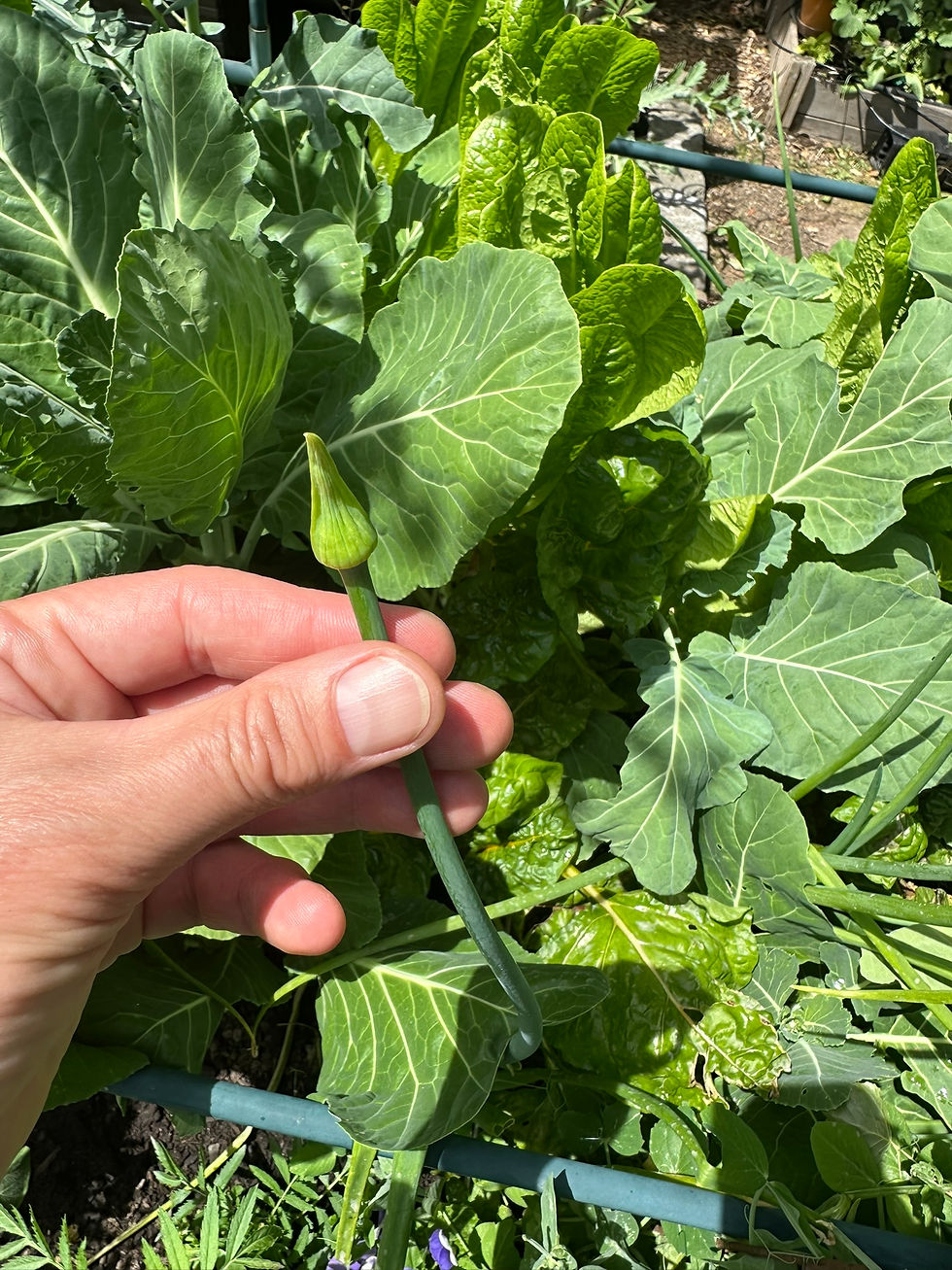
The other thing to watch for is bolting. If you see a fat round flower stalk pushing up from the center of a plant, that onion has decided to make seed instead of a bulb. It will not size up any further and it will not store, because that stalk runs down into the middle of the bulb and is the first thing to rot. Do not fight it. Pull that onion now and eat it fresh in the next week or two, or chop and freeze it. The rest of the patch comes later in summer, when the tops flop over on their own and it is time to lift and cure them. That is a job for another post.

That second round comes down to planting the right things in the right amount, which is exactly the question the PNW Harvest Yield Planner answers. You tell it how many people you are feeding and how much bed space you have, and it tells you how many plants you actually need, so you stop over-planting in summer and regretting it in fall. It is a subscription you can use for the rest of the season:
If you would rather plan the whole thing together, that is what my consultation sessions and the Executive Blueprint are for. I have a few June slots left before I am away for the summer.
One last thing before you head back outside
All of this is the unglamorous middle of the season, the part nobody photographs. Starting fall seeds in June, picking the right blueberry, keeping the birds off the pea shoots. None of it is dramatic. It is just the quiet work that means you are still pulling food out of your garden in November when most beds nearby are bare.
Happy summer gardening. Let me know if you need help, I am here for you.
Jackie
Palatino Garden Adventures
I still have a few June slots open for both the Executive Blueprint and one-on-one consultation sessions. Book yours now before they are gone, so we can plan your beds while there is still season left to plant.
→ The Blueprint is the full design phase - soil assessment, crop selection, succession plan, and layout - everything covered in this post, done for your specific space. Book here.
→ Consultation sessions are a good fit if you want to work through one piece of it yourself with guidance. Either way, the spring planting window sets the deadline, and spots fill before it arrives. Book here.


Comments