
The PNW Gardener's April Checklist and What to Do This Week

April hits in the PNW and there are about thirty things you could be doing in your kitchen garden. Direct sowing, starting seeds indoors, hardening off, topping off beds, fixing what winter broke, weeding, pruning, planning, ordering whatever you forgot to order in February. It is genuinely a lot. And most lists I see online don't help, because they pile on every possible task without telling you what actually matters this week.
So here is the short version. This is your PNW April garden checklist for the week, the eight things to do in your Seattle kitchen garden right now. Zone 9a, last frost mid to late March, and we are now in the part of April where the soil is finally workable but still cold at night. If you do these eight, you will be in good shape going into May. The other twenty things on the internet's April list can wait or be ignored entirely.
1. Check your soil temperature before you plant anything warm-season
This is the one task that prevents the most expensive mistakes in April. A five to twelve dollar soil thermometer takes the guessing out of every other decision on this list.
Stick it four inches into the soil first thing in the morning, when the soil is coldest. Cool-season crops like peas, lettuce, spinach, and radishes germinate at 40 to 50°F, which most PNW soil reaches by late March.
Warm-season crops are more nuanced than the internet usually tells you. There are two numbers that matter. Tomatoes need soil at 50°F minimum to survive an unprotected planting, and night air staying above 50°F. They need soil in the 60s to actually thrive and set fruit well. The survival number is usually hit in Seattle by mid-May. The thrive number is closer to June. Beans, squash, cucumbers, and basil are less forgiving and want soil at 60°F before you put them in.
I know it feels like overkill to use a thermometer for this. It is not. I have planted beans into 55°F soil before and watched them rot before they germinated. Buy the thermometer. Use it.

2. Direct sow your cool-season crops this week
If you haven't already, get these in the ground now. They want cool soil and short days, and the window is closing as we head into May.
Peas first, with the trellis already in place before you plant. Snap, snow, or shelling, your choice. Then lettuce, spinach, and arugula. Sow a short row this week and another row in two weeks so you have a continuous harvest instead of one giant flush of lettuce that all bolts at once. Radishes, carrots, and beets all go in now too. Soak the beet seeds overnight first, and keep the carrot row consistently moist until they sprout, because carrots take forever and they will not forgive you if the soil surface dries out and crusts.
Swiss chard and kale belong in this group too. They will produce all the way into fall, and a single April planting feeds you for months.

3. If you haven't started tomato seeds yet, buy starts instead
This is the section where I have to be honest with you. Tomatoes, peppers, and eggplant want six to eight weeks indoors before they go outside. Mid-May transplanting means seeds went in the ground in mid-March. If you are reading this in late April and you have not started seeds yet, that window is closed. Starting tomato seeds now puts your transplant date in mid to late June, and at that point you have already given away a full month of growing season.
Do not start tomato seeds this week. Buy starts from a local nursery in May. Pick a small independent nursery over a big-box store, because they stock varieties bred for our cool, short summer (Sungold, Stupice, Oregon Spring, Early Cascade) instead of the heat-loving varieties that ship to every store nationwide. Look for stocky, leafy plants with thick stems. Skip anything tall, thin, and leggy. Some of my best tomato seasons came from nursery starts. There is no medal for growing from seed.
Squash, cucumbers, and melons are different. They only want three to four weeks indoors before transplanting, and they want soil at 60°F outside. If you start them indoors around mid-May, you will be transplanting in early to mid-June, which is exactly right for our climate. So those seeds you can still start, just a few weeks from now.

4. Transplant out only what can handle cold nights
This is where people get into trouble. April warm spells make everyone want to plant everything, and then a 38°F night kills the tomatoes they put out two weeks early.
The transplant-out list this week is short and cool-tolerant. Lettuce starts and other greens. Brassica starts: broccoli, cabbage, kohlrabi, and more kale. Onion sets if you didn't get them in last fall. That is it.
Harden them off for a full week before they go in the ground. Two hours outside the first day in a shaded, sheltered spot, then add an hour or two each day. By day seven they can handle a full day outside. Skip this step and your seedlings will sit in the ground doing nothing for two weeks while they recover from the shock. If nights are still dropping below 40°F, throw a row cover over them for the first week. Cheap insurance.

5. Hold off on tomatoes, peppers, beans, squash, and basil (or use protection)
Every year I see people plant their tomatoes outside in April with no protection and lose them. Do not do this without a plan. The soil is too cold, the nights are still dropping into the low 40s, and an unprotected tomato in those conditions will either die outright or sit there sulking for a month before it recovers.
The full hold-off list, with the planting windows:
Tomatoes, peppers, eggplant. Unprotected, wait for nights consistently above 50°F and soil at 50°F or above. That is usually mid-May in Seattle.
Beans. Cold soil rots the seeds before they germinate. Wait for soil at 60°F.
Zucchini, cucumbers, summer squash. Same problem as beans. Late May is their time.
Basil. It needs real warmth. Outdoor basil before late May is wasted basil.
If you want to plant tomatoes earlier than mid-May, you can. You just need to give them help. A Wall O'Water around each plant warms the soil and protects from cold nights. Black plastic mulch laid on the bed for a week before planting raises soil temperature several degrees. A floating row cover over the bed traps heat overnight. Local nurseries here will tell you the same thing. Plant earlier with protection, or plant unprotected and wait.
One warm week in April does not mean summer. Check the ten-day forecast and your overnight lows, not today's high, before you decide anything.

6. Top off your raised beds with compost
The soil level in raised beds drops two to three inches over winter as organic matter breaks down. Top it off now, before you plant the rest of your spring crops. Add two to three inches of finished compost and work in a handful of worm castings per square foot.
That is your fertility plan for spring. No bagged fertilizer, no synthetics, nothing fancy. Compost and worm castings, repeated every spring and fall, builds a soil that grows good food year after year.
If you don't have your own compost yet, the bagged stuff from a local nursery is fine. Look for something that smells like forest floor, not like ammonia.
If you can find a peat-free compost, even better. Peat harvesting destroys carbon-storing bog ecosystems, and bagged compost made from yard waste, leaf mold, or composted bark works just as well in a raised bed.

7. Pull weeds while they are small
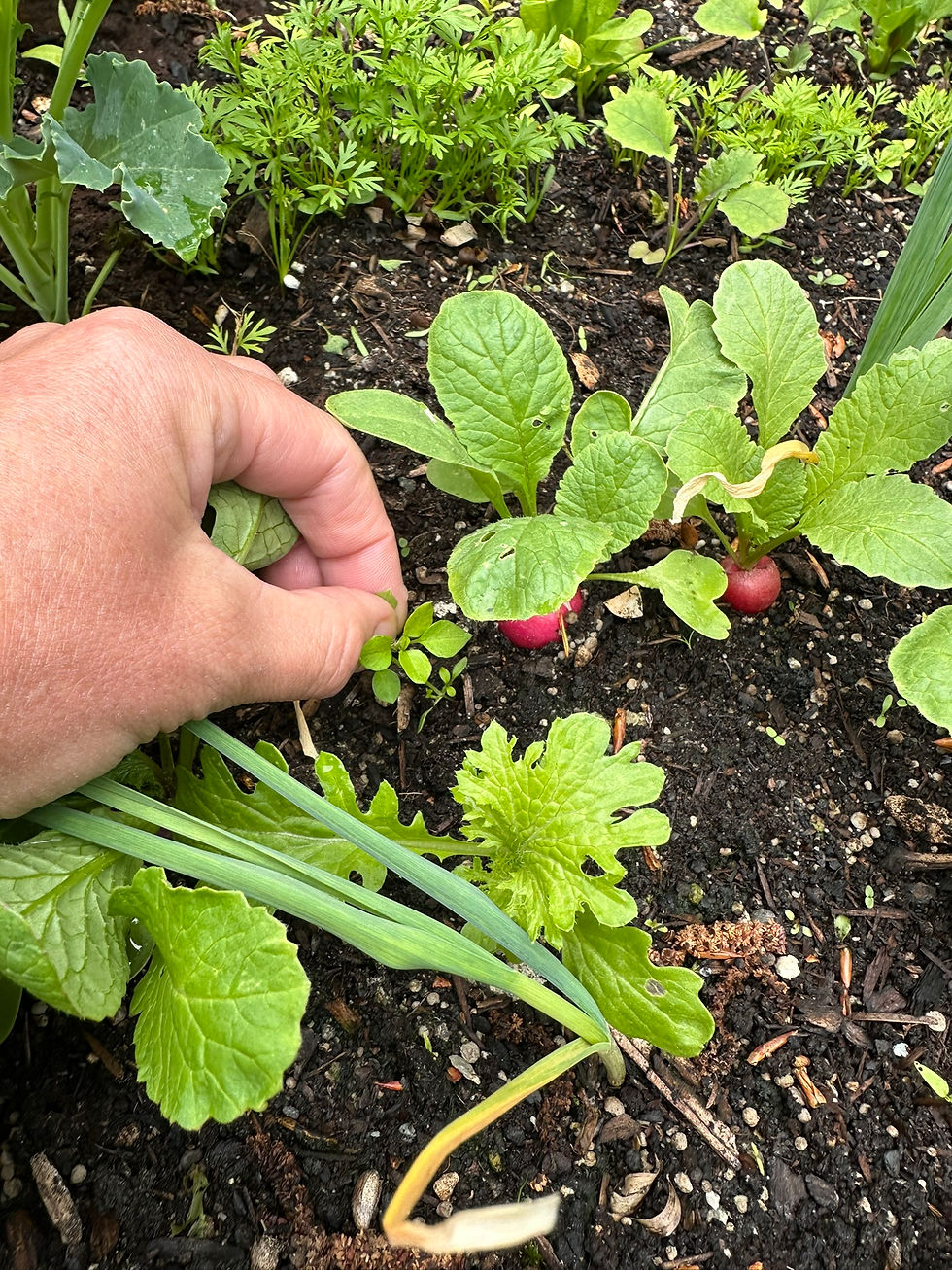
Five minutes, twice a week. April weeds are easy. June weeds are a project, and July weeds are a problem.
Walk the beds with a hori-hori or a small hand hoe and pop out anything that isn't a vegetable. The roots are tiny, the soil is soft from spring rain, and the whole job takes ten minutes per bed if you do it now. Wait until the weeds are flowering and you are looking at an hour per bed, plus a real risk that they have already dropped seed for next year.
8. Plan your warm-season layout before May hits
May is the busiest month of the kitchen garden year in Seattle. Tomatoes go in, peppers go in, squash goes in, beans go in, herbs go in. If you walk into May without a plan for where each of those goes, you will end up with squash crowding tomatoes and tomatoes shading peppers, and you will fix it by July when it is too late.
Sit down this week with a piece of paper or the PNW Crop Planner Pro or the PNW Harvest Yield Planner and sketch out your beds. Tomatoes need full sun. Peppers can handle a slightly less ideal spot. Squash takes more room than you think, so give one plant about four square feet. Beans want a trellis or a teepee. Basil goes near the tomatoes because they like the same conditions and they taste good together at dinner.
Fifteen minutes of planning now saves a full afternoon of replanting in June.

Your PNW April garden checklist for this week (week of April 27)
If you only do five things this week, do these:
Get a soil thermometer and check your beds.
Direct sow lettuce, spinach, radishes, carrots, and beets.
Top off your raised beds with compost.
Start hardening off any indoor seedlings.
Sketch out your warm-season layout for May.
That is it. Not thirty tasks. Five. The other three on the main list (transplant cool-tolerant starts, hold off on warm-season crops, pull weeds while small) are ongoing through May and you can layer them in as you go.
A note on doing all of this with help
If reading this list made you tired instead of motivated, you are not alone. April overwhelm in the kitchen garden is real, and it is the reason most people quit by July. The fix is not more information. It is fewer decisions and a clear plan tuned to your specific yard, your sun, and your beds.
That is what the Executive Kitchen Garden System does. I assess your space, design your beds, install what needs installing, and hand you a care plan that tells you exactly what to do every week through October. No guessing, no thirty-task April, no dead tomatoes in May.
If you want to do it yourself, the PNW Crop Planner Pro gives you the month-by-month sow and harvest schedule for 40+ crops tuned to Zone 8–9a, with live status indicators so you always know what to plant and what to harvest this week. Your first month is free with code PNWPLANNER.
Happy April, PNW gardeners. Let me know if you need help.
Jackie
Palatino Garden Adventures 🌿
Grow With Me & Get Monthly Garden Tips:
April and May bookings are now open for both the Executive Blueprint and one-on-one consultation sessions.
→ The Blueprint is the full design phase - soil assessment, crop selection, succession plan, and layout - everything covered in this post, done for your specific space. Book here.
→ Consultation sessions are a good fit if you want to work through one piece of it yourself with guidance. Either way, the spring planting window sets the deadline, and spots fill before it arrives. Book here.


Comments